

Share
 Sherifat Abdhakeem
1 day ago
Sherifat Abdhakeem
1 day ago
Overview
How we were trafficked with fake Lagos jobs to Mali, by rescued women victim
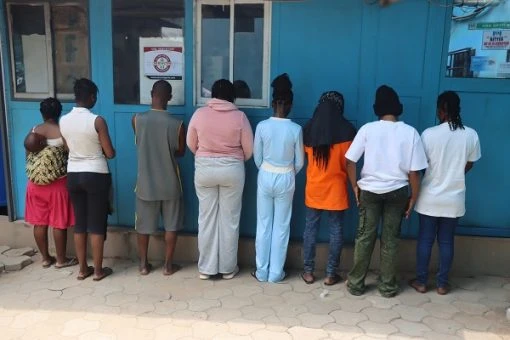
Three women from Plateau State have recount led how they were deceived with promises of legitimate employment in Lagos and subsequently trafficked to Mali after accepting what they believed were genuine job opportunities. The women said they were later forced into prostitution and subjected to abuse before they were eventually rescued and returned to Nigeria. The women, Becky Ibrahim, 35, Blessing Nanging, 24, and Miracle Yakubu, 23, shared their experiences following their rescue and repatriation by the Global Anti-Human Trafficking Organization (GAHTO).
The victims, who spoke during an interview facilitated by journalists in Lagos, said economic hardship, unemployment and the need to support their families influenced their decision to accept what they believed were genuine job opportunities. Becky Ibrahim, a mother of three, said she was approached in Jos by a man who claimed he could help secure employment for her in Lagos.
According to her, she agreed to travel because she was struggling financially following the death of her husband and needed to care for her children and support their education. She said the journey, which she initially believed was to Lagos, later extended beyond Nigeria’s borders through Cotonou and eventually to Mali, where she discovered that the promised jobs did not exist.
Becky alleged that upon arrival in Mali, the women were informed that they would be engaged in prostitution rather than the jobs they had been promised. She further claimed that attempts to resist the arrangement were met with physical abuse and intimidation.
Another victim, Blessing Nanging, said she accepted the offer because she had been unable to provide food and other necessities for her two children. According to her, she had expected to secure employment in a shop or business establishment in Lagos but later became suspicious when the trip continued into neighbouring countries.
Blessing said the traffickers eventually informed them that they had been recruited for prostitution and not for the work they had initially discussed. She alleged that refusal to comply often resulted in punishment and threats.
Miracle Yakubu, 23, also recounted her experience, alleging that she suffered physical assault after attempting to escape from the traffickers. She claimed she was attacked and beaten after she and another victim planned to flee.
The women urged young Nigerians to exercise caution regarding employment offers, particularly those involving travel outside their communities or across borders. The rescued victims were later received in Lagos by representatives of the BIROM Association and handed over to the group’s financial secretary, Naomi Badu.
Badu said the association was informed after the victims were brought back into Nigeria through Ghana and immediately mobilised support for them. According to her, the organisation regularly intervenes in cases involving members of the community facing challenges, including trafficking, illness and displacement. “We always respond whenever our people are in distress, whether sick, stranded or trafficked. We make sure they are safely transported home and reunited with their families,” she said.
A human rights advocate and journalist, Jumai Madaki, expressed concern over what she described as the growing rate of human trafficking and labour exploitation involving young Nigerian women, particularly from Plateau State. Madaki said many victims are lured with promises of jobs and better opportunities before being trafficked to countries such as Mali and Ghana, where they are allegedly forced into prostitution and exposed to abuse.
She attributed the trend to poverty, insecurity, family instability and discrimination against girls, noting that these conditions have increased the vulnerability of many young women. Madaki also warned that some former victims who returned home with financial gains had allegedly become recruiters for trafficking networks. She called for stronger community engagement and advocated community-based regulations aimed at holding traffickers and negligent parents accountable. The advocate further urged the government to strengthen anti-trafficking legislation and provide increased funding and operational support to the National Agency for the Prohibition of Trafficking in Persons to improve efforts to combat human trafficking.
Meanwhile, the president of GAHTO, Micheal Prosper, raised concerns over reports of labour exploitation involving Nigerians trafficked to Egypt. According to him, some traffickers and sponsors allegedly seize victims’ international passports upon arrival and force them into exploitative labour arrangements lasting between 18 and 24 months. He said the organisation would forward the identities of those allegedly involved to security agencies for investigation and possible placement on watchlists.
Prosper also claimed that members of the Yoruba community had repeatedly reported cases involving agents and sponsors who allegedly confiscate passports and subject victims to harsh conditions in Egypt. He called on the Nigerian government, security agencies and international organisations to intensify efforts against trafficking and labour exploitation networks operating across Africa and the Middle East. The development has again drawn attention to concerns over trafficking syndicates that target vulnerable Nigerians with false promises of employment opportunities both within and outside the country.
Credit: The Nation