Share
 Gabriel Nwabunwanne
2 months ago
Gabriel Nwabunwanne
2 months ago
Overview
Why Nigeria's Ban on Sachet Alcohol is a Prescription for Public Health
In a nation often gridlocked by debate,
@NGRSenate
firm stance against sachet alcohol represents a critical intervention for public health.
The 10th Senate's recent resolution to enforce the ban on sachet alcohol production by December 31, 2025, has ignited a necessary firestorm. The conversation is, predictably, mixed. On one side, cries of "elitism" and economic hardship for the poor, on the other, a long-overdue sigh of relief from public health professionals and community leaders.
Let us be unequivocal, the Senate's move is not an attack on the poor but a profound defence of them. It is a courageous, data-driven step to pull Nigeria back from the precipice of a full-blown public health crisis. This is not nanny-state politics; it is a critical triage for our national well-being.
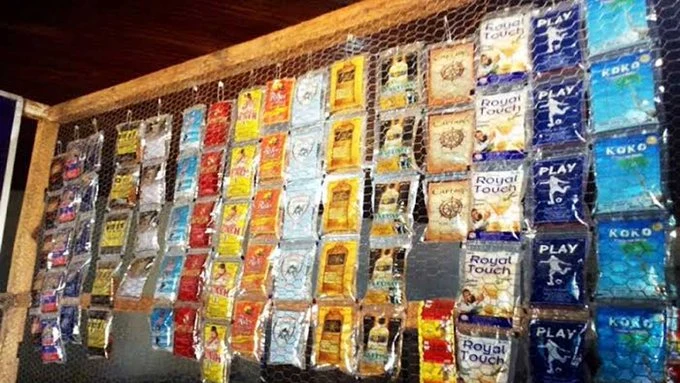
The primary argument for sachet alcohol is its affordability. At just ₦150 to ₦200 per sachet, it is within reach for the most vulnerable. But this is a devil's bargain. This very affordability is what makes it so perilous. We are not talking about an occasional beer; we are talking about potent, often unregulated spirits sold like candy, enabling consumption patterns that are destructive and continuous.
The data paints a grim picture. A 2022 study by the Centre for Research and Information on Substance Abuse (CRISA) revealed that over 70% of alcohol consumed in Nigeria is in the sachet and pet bottle category. The World Health Organization (WHO) estimates that alcohol is responsible for over 3 million deaths globally each year, and a significant portion of this burden falls on low and middle-income countries where consumption is rapidly increasing. In Nigeria, the unbridled access to cheap, high-strength alcohol is fueling a silent epidemic.
The dangers are not abstract, they are visible in our communities, our hospitals, and our homes.
The sachet's design is a marketer's dream and a parent's nightmare. Easily concealed, cheap, and potent, it is the perfect gateway for underage drinking. Recent studies show a alarming 55.8% drinking prevalence among Nigerian youths, up from 30% in 2015 and 34% in 2021 . This exponential growth correlates directly with the proliferation of sachet alcohol. The WHO's 2018 report already showed Nigeria had one of Africa's highest rates of heavy episodic drinking among 15-19 year olds at 22.5% . When schoolchildren can purchase a shot of liquor for the price of a sweet, we are normalizing alcoholism in a generation. Reports confirm that children as young as 10 years old can purchase these sachets for as little as ₦100, raising fears of irreversible brain damage and addiction .
The Nigerian Medical Association (NMA) has consistently linked the rise in cases of liver cirrhosis, pancreatitis, and alcohol-related mental disorders to the proliferation of cheap spirits. The WHO directly links harmful alcohol use to more than 200 health conditions, including infectious diseases like tuberculosis and HIV/AIDS, non-communicable conditions like liver cirrhosis, and various cancers . Each sachet sold at ₦50 ultimately contributes to a healthcare cost running into hundreds of thousands of Naira for treating end-stage liver disease, a cost borne by families and an already overstretched public health system.
Credit: @Alpha_Yom on X