

Share
 Abdulazeez Abubakar
7 hours ago
Abdulazeez Abubakar
7 hours ago
Overview
Remember The Malaysian Boys? Here's What Happened To Them
Nothing lasts forever. At some point, the Sony Ericsson K705i phone model was the real deal. Some ladies lost their virginity because of BlackBerry phones; today, the company is almost obsolete. Mercedes-Benz 190 and 230 models were cars driven by my uncle only on Sundays or special occasions back in the 90s. In 2026, they have become relics of history or, in some circles, emblems of poverty. Life is transient.
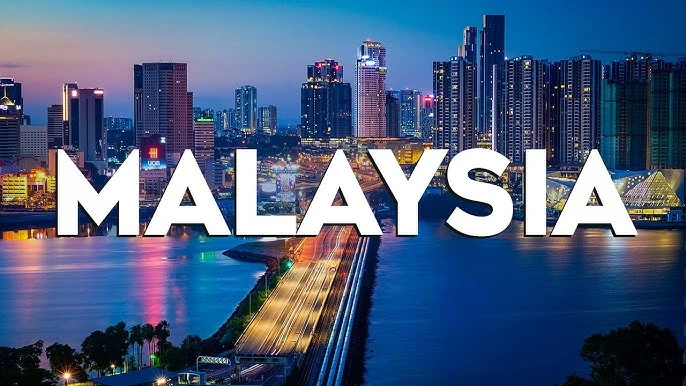
Similarly, Malaysia was like a Mecca of sorts. Every young Nigerian wanted to be there to obtain a magic wand for success, and for many, it seemed to be working. In 2016, Malaysia's High Commissioner to Nigeria stated that about 13,000 Nigerian students were studying in Malaysia at various educational levels. He also noted that Nigerians constituted one of the largest groups of African students in the country. That number didn't account for workers, entrepreneurs, spouses, or undocumented migrants
Tuition fees in Malaysia were lower than those in Western countries. English was widely used in universities, visa processes were relatively straightforward, and living costs were affordable compared with the UK or US.
After just six months or barely a year in Malaysia, some of these guys would return to Nigeria on holiday with success stories. A friend spent a year there on a student visa and returned with an Infiniti FX35 full option in 2010. Being in that car hit differently. His electronic gadgets were baffling. I rode in the car with him in Ibadan and asked, "How did you achieve this?"
He replied in local parlance, "Baba na God o."
His source of income was unclear. Many said some people were engaged in internet fraud, romance scam operations, money laundering, and drug trafficking, while others claimed they were selling their kidneys. Till this day, the "truth" depends on who you ask.
This particular friend added one of the girls from my secondary school on Facebook. Right from time, she had the kind of figure a man could break the bank for. Many tried to woo her but failed. To my greatest shock, he called to tell me he was spending the night with her at a popular hotel in Osun State. My jaw dropped.
As a poor man, I had too many questions about how this happened seamlessly, but he laughed them off. Stupid questions, I guess.
My friend's case was not an isolated one. Another former secondary schoolmate was also there doing wonders. Every day was like a party. He would drink, go shopping, and share suggestive pictures with foreign women I could only dream of. There was no mention of work or any other source of income. It was as if money was growing on trees. Satu Malaysia!
Some girls prepared for the "Malaysian boys," as they were called, during Christmas. They would come back to Nigeria and unveil new cars, landed properties, businesses, and luxurious designer brands. This was the dream of many Nigerian youths. Even some of the most decent women struggled to turn down their romantic overtures. These boys would take you to high-end places that money had previously denied you access to. The experience was magical. Those experiences gave real meaning and understanding to the songs of American rapper, Rick Ross.
Earlier in the day, you were like a peasant. Then suddenly at night, a well-dressed and attractive waitress was bowing to serve you food and drinks in a tight mini skirt and a cleavage-baring outfit.
In the early 2000s, many Nigerian youths with inexplicable wealth were believed to have links to Malaysia. Nigerian music artistes soon started going there to organise concerts and rake in cash. They also visited their friends and sprinkled the names of successful individuals into their songs. Some of the Malaysian boys started opening record labels and sponsoring young musicians.
Some women could not wait to see the big boys from Malaysia at the end of the year. Some even relocated to Kuala Lumpur to be with them. Rumour had it that a few got involved in prostitution.
The Cookie Crumbles
Around 2015, the Malaysian government was tired of being tagged as one of the "fraud capitals of the world."
In 2013, Malaysian police reported that internet fraud cases had doubled, with losses exceeding US$11 million. Authorities stated that 478 Africans had been apprehended on suspicion of involvement in such scams, and some cases involved Nigerians on student visas. The government started making decisive changes. Malaysian authorities increased scrutiny of Nigerians applying for student, work, and long-term visas.
The activities of some foreigners involved in crime and the spending of illicit wealth had created a negative image. The local police were reportedly taking bribes almost as readily as their Nigerian counterparts. Cybercrime became heavily associated with Kuala Lumpur. Other urban crimes were also reportedly on the rise.
Arrests and prosecutions of erring Nigerians began on a large scale. During the crackdowns, some Nigerians reportedly lost their lives after jumping from high-rise buildings while attempting to evade arrest. The government plugged some of the loopholes that encouraged and facilitated internet fraud.
The smoke was becoming choking, and people started leaving.
Some returned to Nigeria, while others moved to South Africa, Cyprus, and Dubai. A significant number allegedly moved to the United States, Canada, Australia, the United Kingdom, and other European countries to start new lives with their families.
Today, nobody talks much about the Southeast Asian country anymore. The gist of healthcare jobs in the United Kingdom, Canadian permanent residency, and various tech opportunities across the world has taken over.
Did you ever meet a Nigerian who lived in Malaysia?
Share your experience in the comment section.
https://www.facebook.com/thevillagetowncrier/posts/pfbid02QpsoxQq36KURHMYxLH1PYqhvMdnxahQcxiLpRBD2QUfvX2PfzveDYkzcEptGHQpcl