

Share
 Olugbemi. Adeyinka Ogunleye
1 month ago
Olugbemi. Adeyinka Ogunleye
1 month ago
Overview
Movie Review: The Herd isnt fiction anymore, its Nigerias present
Recent abductions in Kwara, Kebbi, and Niger give Daniel Etim-Effiong’s thriller an unsettling new relevance.
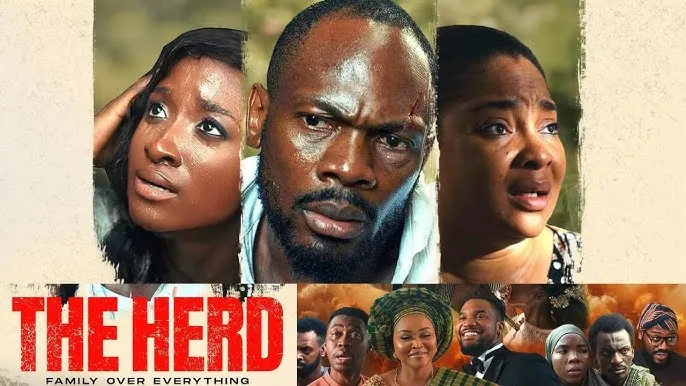
At a time when Nigeria is grappling with yet another wave of abductions from the attack on worshippers in Kwara to the kidnapping of schoolchildren in Kebbi and Niger. ‘The Herd’ no longer feels like a story created for the screen. Daniel Etim-Effiong’s crime thriller has taken on an unsettling relevance, blurring the line between fiction and the country’s daily reality.
Released in cinemas on 17 October and now streaming on Netflix, the film forces Nigerians to confront a truth many would rather avoid. Its depiction of kidnapping the forests, the fear, the randomness of violence- mirrors the same tragedies dominating headlines today, turning what once felt like entertainment into a chilling reflection of the nation’s present. Featuring casts like Daniel Etim Effiong, Deyemi Okanlawon, Genoveva Umeh, Kunle Remi, Mercy Aigbe, Tina Mba, Lateef Adedimeji, and Nobert Young, ‘The Herd’ grounds its story in familiar faces while giving room for lesser-known talents to shine through with startling realism. Now let’s go to the story.
Plot
The story begins in celebration: newlyweds Derin and Fola are desperate to escape pushy family members and hit the road with their best man, Gosi (Daniel Etim-Effiong). Their joy is short-lived. A violent ambush on the highway sends them, and other unsuspecting travellers, into the tight grip of kidnappers. Gosi managed a narrow escape, but luck ran out on him; he was caught when he met a dead end, a large body of water. Now he is facing the worst nightmare of his life. Fola is killed while attempting an escape, and Derin is ordered by the sadistic Yakubu (Ibrahim Abubakar) to mutilate her husband’s body, a task Gosi painfully completes on her behalf.
Back home, families scramble to raise a N50 million ransom as police detectives in Ekiti attempt to track the gang. Meanwhile, Gosi’s wife battles illness, judgmental relatives, and the grinding pressure of raising ransom money alone. The question grows heavier by the minute: Who will make it out alive?
Review
The Herd succeeds in exposing the psychological and emotional wreckage banditry has unleashed across Nigeria. It is not a perfect film, but it is an important one. The film shines in how tightly it holds the audience. It opens with a lively Nigerian wedding, rich aso-oke, joyful highlife music, before sharply shifting into fear. The ambush lands like a punch to the stomach, and Effiong keeps the tension high with brilliant pacing: no dull moments, just a steady rise in fear that mirrors the victims’ desperation.
One of the film’s major standouts is the stellar performance from the cast members, including Ibrahim Abubakar (who played the role of Yakubu), who is an unforgettable character. His rage, bitterness, and blind devotion to violence feel disturbingly real. Interestingly, the standout performances come from relatively unknown Hausa actors whose portrayal of bandits is so convincing it borders on documentary. Their scenes throb with menace, drawing from the same terror that headlines about the alarming insurgency in the nation invoke.
Fiction turns reality
The movie launches us into the world of Inside the kidnappers’ camp, where tensions simmer. Yakubu’s brutality collides with the colder, calculating restraint of Halil (Abba Ali Zaky) and his wife, Habiba (Amal Umar). There is a good use of suspense in the movie; a police lead from Fola’s Apple Watch briefly offers hope but collapses when a pastor, played by Lateef Adedimeji, misleads investigators after purchasing bodies from the gang.
From the sound design to the gunshot effects, the editing, props, and even the almost too-realistic body parts, The Herd pays meticulous attention to detail. The music complements the themes without overwhelming them, and the settings, which include forests, hideouts, and rural compounds, accurately mirror the Southwest terrain.
Props
The film also employs good use of the Nigerian Language demographics; the three major languages in Nigeria, Hausa, Yoruba, and Igbo, share screen time with English, reflecting Nigeria’s diversity and its fractured tensions. Though the film showcases dark aspects, Hausa bandits, Igbo caste systems, and Yoruba organ trafficking, it does so without stereotyping entire cultures. Additionally, the movie’s customs beautifully complement the narrative; for instance, Derin’s wedding dress becomes both a symbol and a burden, repeatedly hindering her escape attempts. The bandits dress precisely as real-life photographs depict them: ragged, armed, adding yet another touch of believability.
Still, The Herd isn’t without flaws. At times, the story falls into familiar thriller patterns, with a few twists that can be spotted early. Some action scenes, especially the final shootout, drift into exaggerated choreography that clashes with the film’s otherwise gritty realism. A couple of characters also get quick, unfinished endings that leave emotional gaps. These issues don’t ruin the experience, but they prevent the film from achieving the status of a masterpiece in an already crowded Nollywood landscape.
The Herd is not just a movie; it is an indictment of a nation that has normalised tragedy. It leaves you with that persistent Nigerian question: What if this happens to me or someone I love?
With gripping performances, cultural depth, and frightening realism, The Herd is a tense, emotionally charged thriller that mirrors a country’s worst fears.
Verdict:
8/10
The Herd is now streaming on Netflix
Credit: Premium Times